Dog car sickness: how to travel with a dog that gets nauseous (2026)
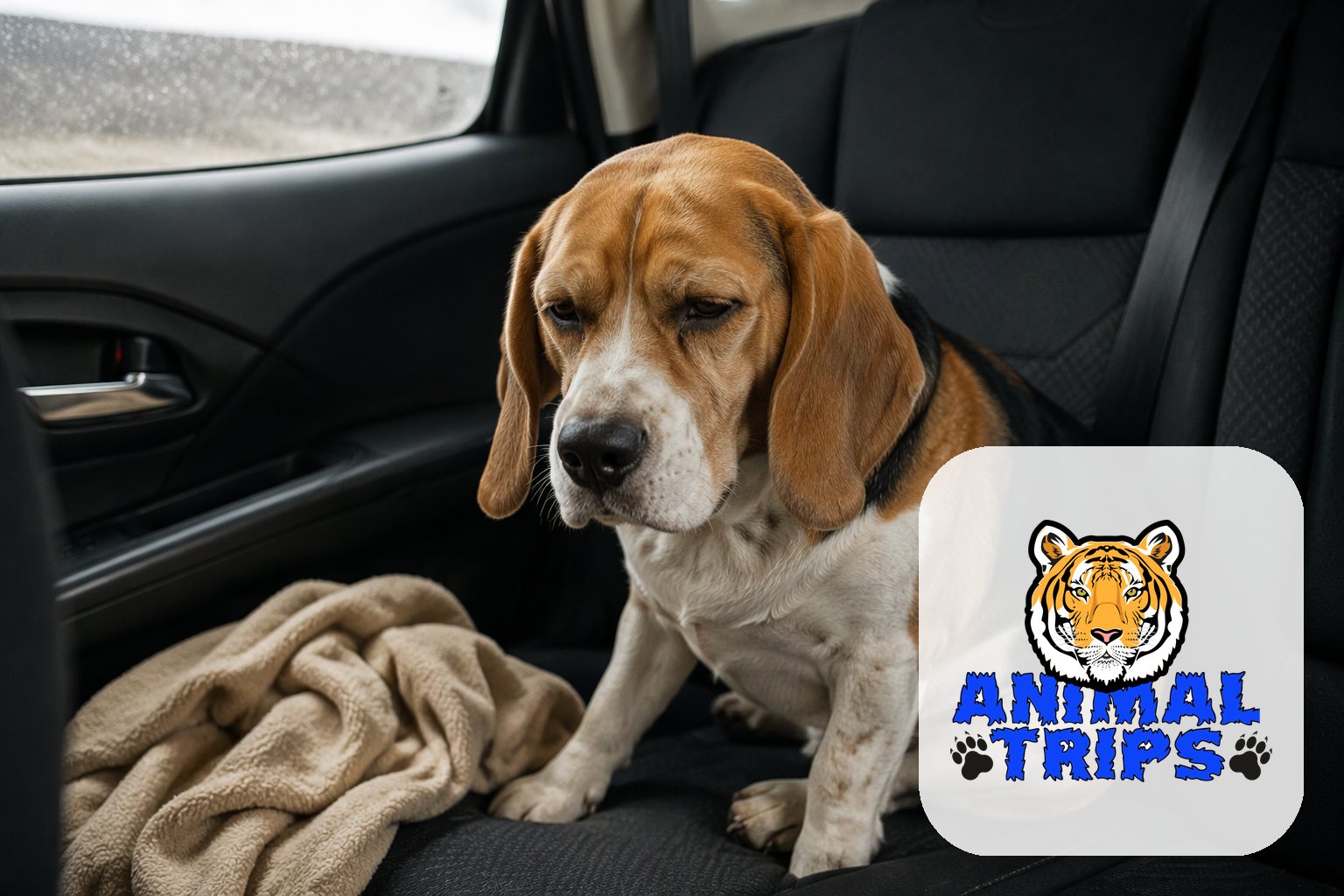
Drooling, lip licking, whining, vomiting ten minutes into the drive — motion sickness affects roughly one in five dogs, and it is the main reason owners dread long trips. The good news: car sickness is manageable, and most dogs improve dramatically with the right preparation. Here is what actually works in 2026.
Why dogs get carsick
- Balance system: like humans, dogs feel the conflict between what the eyes see and what the inner ear senses — puppies are affected most because their balance system is still developing;
- Anxiety loop: a dog that vomited once in a car starts expecting it — stress itself triggers nausea, and the loop feeds itself;
- Full stomach: food plus motion is the classic recipe;
- Position: dogs facing sideways or backwards in a vehicle feel motion more intensely.
What helps before the trip
- Feeding window: the last meal 3–4 hours before departure; water stays available;
- Desensitisation: 5–10 short practice drives in the two weeks before a long trip, always ending with something good — a walk, a treat, home;
- Crate position: facing forward, secured against sliding, with a familiar-smelling blanket;
- Vet-approved medication: for confirmed motion sickness, vets prescribe maropitant (Cerenia) — effective, non-sedating, given 2 hours before travel. Discuss it with your vet; do not improvise with human remedies;
- Fresh air: slight ventilation reduces nausea measurably — our cabins are climate-controlled with constant air exchange.
How we drive with motion-sensitive dogs
- Smooth acceleration and braking, no sharp lane changes — the driving style matters as much as medication;
- Stops every 2–3 hours with a real walk — nausea resets when the dog moves on solid ground;
- The crate is placed in the most stable spot of the vehicle, facing forward;
- Absorbent bedding plus spare pads — if the dog does vomit once, it is cleaned immediately so the smell does not trigger another round;
- We ask you to flag motion sickness when booking — it changes how we plan the route's pace.
Documents for the trip are the standard set: microchip, rabies vaccination, EU pet passport. Book a gentle-paced route via the contact form.
Frequently asked questions
Why does my dog vomit in the car?
Most often it is motion sickness: the conflict between what the eyes see and the inner ear feels, made worse by anxiety and a full stomach. Puppies are affected most, and many dogs improve as they mature and gain positive car experience.
What can I give my dog for car sickness?
Ask your vet about maropitant (Cerenia) — the standard vet-prescribed anti-nausea medication for dogs, given about 2 hours before travel and non-sedating. Do not use human motion-sickness remedies without veterinary advice.
Should I feed my dog before a long car trip?
The last full meal should be 3–4 hours before departure. Water stays available until the trip and is offered at every stop. An empty-but-not-starving stomach is the best starting point.
Can a dog grow out of car sickness?
Often yes — many puppies improve by one year of age as the balance system matures, especially with short positive practice drives. Dogs whose sickness is anxiety-based need desensitisation work, not just time.