A puppy's first trip: how to make the first journey stress-free (2026)
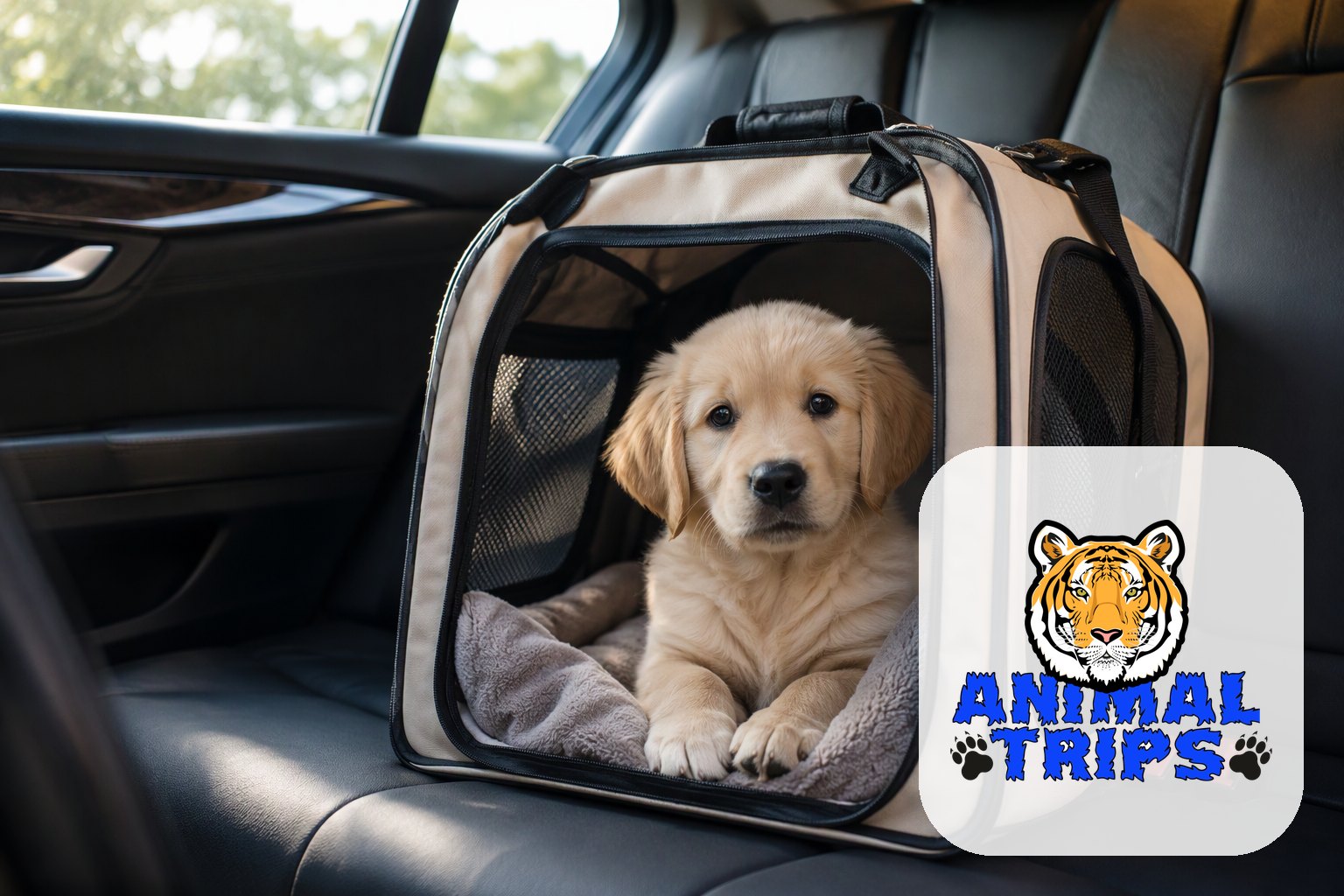
The first journey is a formative experience for a puppy — done right, it teaches the dog that travel is normal and safe; done wrong, it can seed years of car anxiety. Whether you are collecting a puppy from a breeder or moving with a young dog, here is how to make the first trip a good one in 2026.
Before the trip: five days of preparation
- Crate time at home: the travel crate appears in the living area with the door open, meals happen inside — the puppy should nap there voluntarily;
- Short engine-on sessions: 5–10 minutes in the parked car with the engine running, then back to play — repeat daily;
- First micro-drives: around the block, always ending at home with praise;
- The smell kit: a blanket from the litter (breeders usually provide one) — littermate smell is the strongest calmative a puppy has;
- Vet check: confirm the vaccination timeline fits the travel date — see the documents checklist.
Trip day: timing is everything
- Last meal 3–4 hours before pickup — car sickness is the top puppy travel problem (see car sickness guide);
- A good play session before departure — a tired puppy sleeps through the first hours;
- Toilet right before boarding;
- No water restrictions — the bowl is available and refreshed at stops.
What we pack for a puppy passenger
- Absorbent pads plus spares — accidents are expected and fine;
- The litter-smell blanket and one familiar toy;
- The puppy's usual food, portioned per the breeder's schedule — no diet experiments on the road;
- Feeding and toilet times noted from the breeder — young puppies eat 3–4 times a day and need a toilet stop shortly after each meal;
- Extra cleaning kit — the crate is refreshed at every stop.
How breeder-to-owner delivery works with us
We collect the puppy from the breeder, verify the passport against the animal, and drive with stops every 2–3 hours — puppies get water, food on schedule, toilet breaks and quiet crate time. You receive photo and video updates, and the puppy arrives with its passport, documents and the familiar blanket. Full details: puppy transport from breeders. Book via the contact form — quote within 60 minutes.
Frequently asked questions
At what age can a puppy make its first long trip?
For travel between EU countries the legal minimum is 15 weeks (rabies vaccination from 12 weeks plus a 21-day wait). Shorter domestic trips are possible earlier once the puppy is weaned and the vet confirms it is fit to travel.
How often does a puppy need stops on a long trip?
Every 2–3 hours: water, a toilet break, a short walk and a quick crate refresh. Puppies also eat 3–4 times a day, so feeding follows the breeder's schedule noted at pickup.
Will my puppy be stressed during delivery?
Some initial vocalising is normal and usually settles within the first hours. The litter-smell blanket, a calm climate-controlled cabin and regular human contact make a big difference — most puppies sleep through much of the journey.
What documents travel with the puppy?
The EU pet passport with the microchip number and rabies vaccination record (plus any breeder documents: pedigree, contract, health records). We check the passport against the puppy at pickup and hand everything to you at delivery.