
Transporting multiple pets at once: how multi-pet moves work in 2026
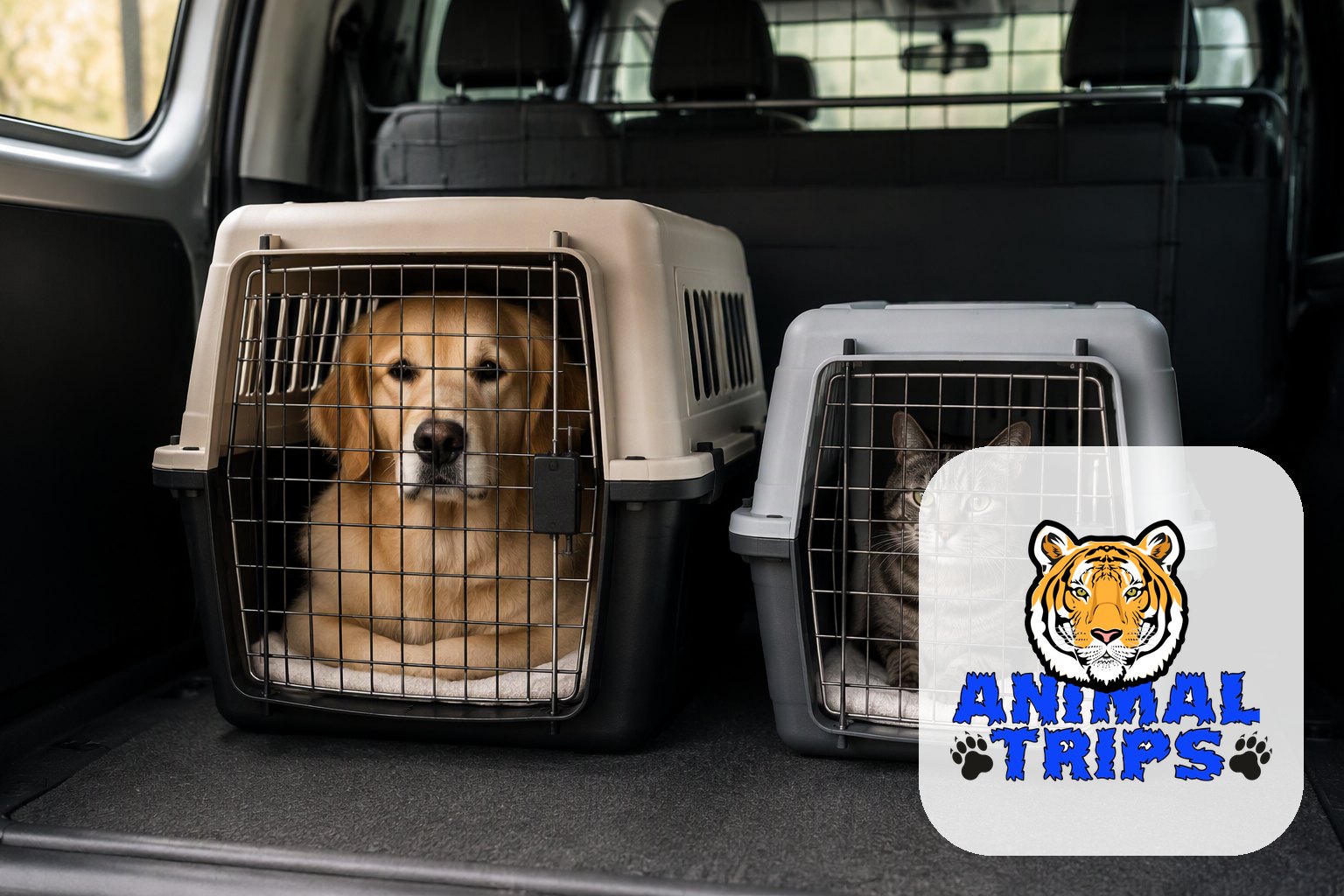
Two cats and a dog moving to Lisbon, three generations of one feline family relocating to Berlin, a bonded pair of senior Labradors — multi-pet moves are our daily reality. The good news: moving several pets together is not just possible, it is cheaper per animal and often easier on the pets themselves. Here is how it works in 2026.
The economics: additional pets cost less
- Second pet from the same family: −30–50% on its price;
- Third and further pets: the discount grows — a three-pet family typically pays for about two;
- One pickup address, one delivery address, one paperwork check — the logistics cost is shared;
- Send the full group details via the contact form and the quote comes back as one transparent number.
Bonded pairs: together or separately?
Bonded animals — littermates, an old dog with its younger companion, two cats who sleep in one pile — travel measurably calmer when they can see and smell each other. Our arrangements:
- Two cats: usually one XL crate for a bonded pair — they curl up together and stress drops visibly;
- Two small/medium dogs: separate crates placed side by side — close enough for contact, separate enough for safety on braking;
- Dog + cat from one family: separate crates, always — even the friendliest pair needs its own space on the road;
- Three or more: crates are arranged so the group leader has visual contact with the others.
Documents: each pet needs its own set
A common misconception is that littermates or pets from one household share documents. They do not: every animal needs its own microchip, its own rabies vaccination and its own EU pet passport. At pickup we check each passport against each animal — this takes a few extra minutes and prevents border problems.
Keeping a group calm on the road
- Feeding times follow the home schedule, each pet with its own bowls and its own food — bring labelled portions;
- Stops every 3–4 hours: dogs are walked one at a time or in compatible pairs, cats are checked in their crates;
- Water refreshed at every stop for every crate;
- Photo updates cover the whole group — you see each pet, not just «the van»;
- If one animal is anxious, it rides in the quietest spot, and the confident ones anchor the group's mood.
Real example: Warsaw–London with two cats — the full journey documented. Prices and group discounts: price list or the quote form.
Frequently asked questions
How much does it cost to transport two pets?
The second pet from the same family gets a 30–50% discount, and the discount grows for the third and further pets — a three-pet family typically pays for about two. One quote covers the whole group.
Can two cats travel in one crate?
Bonded cats often travel better together — we use one XL crate for a pair that sleeps in one pile at home. Dogs ride in separate crates placed side by side: close enough for contact, separate for safety.
Do my pets need separate passports?
Yes. Every animal needs its own microchip, rabies vaccination and EU pet passport — documents are never shared, even between littermates. We check each passport against each animal at pickup.